266. I don’t know who sold our homeland, but I saw who paid the price
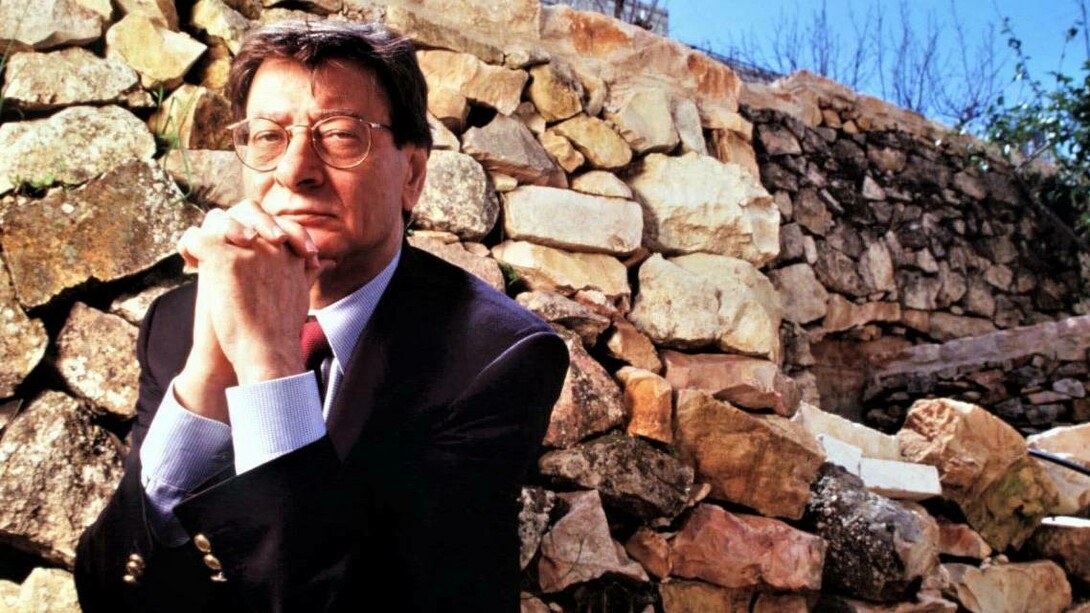
Over the past few days, I have been reflecting on Palestine’s poet of resistance, Mahmoud Darwish, and I feel driven to write about him because one of his poems will become the banner for my upcoming website focused on war. I will provide more details later.
Mahmoud Darwish (1941–2008) was a Palestinian poet and author. In 1988, Darwish authored the Palestinian Declaration of Independence, officially announcing the establishment of a State of Palestine. He wrote in Arabic and also spoke English, French, and Hebrew.
Darwish is honored as Palestine’s national poet for his poetry that captures the yearning of Palestinians who lost their homeland, which was taken by Zionist militias to establish modern Israel.
Darwish was born with a rebellious spirit and was recognized early on as a poet of resistance. In the 1960s, he was jailed for performing his poem “Identity Card," which later became a protest anthem.
Darwish was born into a modest farming family in Barweh, a village in Akka, an Arab city that was destroyed by Zionist militias in 1948 and later became part of Israel. At six years old, he saw his village, along with hundreds of others, destroyed during the Nakba of 1948, the event that marked the establishment of Israel.
Like 750,000 other Palestinians, his family was forced into exile due to violent attacks by Zionist militias and the newly formed Israeli military. They sought safety elsewhere, and the family was among the 110,000 Palestinian refugees in settlement camps in neighboring Lebanon.
Records indicate that Darwish traveled to the USSR in 1970 and moved to Cairo in 1971 to work for Al Ahram newspaper. He later relocated to Beirut, where he edited Palestinian Affairs from 1973 to 1982. In 1981, he founded and edited the journal Al-Karmel.
In 1974, he wrote Yasser Arafat’s famous speech to the United Nations General Assembly, which included the line: “Today I have come bearing an olive branch and a freedom fighter’s gun. Do not let the olive branch fall from my hand.” He joined the Palestinian Liberation Organization in 1973 and served on its executive committee from 1987 to 1993.
While in exile, Darwish worked with Palestinian scholar Edward Said on the 1988 Palestinian Declaration of Independence. During a summit in Algiers, the PLO expressed support for a two-state solution, leading to Palestine’s recognition as a state and Yasser Arafat’s official position as its president.
Over the following five years, the situation evolved. By 1993, Darwish and Said had emerged as prominent critics of the Oslo Accords, which failed to resolve critical issues like Jerusalem's status, Palestinian refugees, Israeli settlements, security arrangements, and borders. Darwish was disheartened, perceiving the accords as a strategic move by Israel that indicated a lack of real commitment to their enforcement. As a result, Darwish stepped down from the PLO executive committee.
Darwish returned to Palestine in 1996, settled in Ramallah, and asked in his will to be buried next to Ramallah's Palace of Culture.
In 2005, when the Hamas-led municipality abruptly banned outdoor music and dance performances, arguing they were forbidden by Islam, Darwish cautioned that there are Taliban-like elements within our society, and this is a very dangerous sign.
In 2007, having distanced himself from politics, he criticized the factional disputes between Fatah and Hamas, the two dominant Palestinian parties. He also expressed concern about Hamas's victory over Fatah in the Gaza civil war, which led to Hamas's full control of Gaza. He criticized the conflict, calling it a public act of suicide and a hindrance to Palestinian statehood.
He argued that their infighting further hindered efforts to establish a Palestinian state. He remarked, “One people now have two states, two prisons that don’t greet each other. We are victims dressed in executioners’ clothing.”
In ‘Memory for Forgetfulness’, Darwish reflects on Israel's 1982 invasion of Lebanon and the 88-day Beirut siege that began on August 6, the anniversary of the Hiroshima bombing. Darwish states, “On this day, on the anniversary of the Hiroshima bomb, they are trying out the vacuum bomb on our flesh and the experiment is successful.”
Darwish appeared as himself in Jean-Luc Godard's film 'Notre Musique', whereas 'In the Presence of Absence' is a Syrian TV series that explores his life.
Darwish published more than 30 collections of lyrical Arabic poetry, which have been widely translated. His poems often focus on themes of loss, longing, and exile—topics that deeply resonate with people fighting against occupation worldwide. He received the Lenin Peace Prize and France's Knight of Arts and Letters Medal.
Now in Gaza, where Palestinians suffer the consequences of an Israeli genocide, supported by the US, representations of their innermost feelings amid the carnage appear in Darwish’s poetry.
I have selected some of his best-known poems here.
To start with, his poem Identity Card, which is an anthem for protest -
Write down
I am an Arab
And my identity card number is fifty thousand
And I have eight children
And the ninth arrives in a summer.
Does this bother you?
A 14-year-old Darwish recited a poem he composed in class, depicting a Palestinian boy expressing grievances to a Jewish boy.
You can play in the sun as you please,
and have your toys, but I can’t.
You have a house, and I have none.
You have celebrations, but I have none.
Why can’t we play together?
And his most famous poem, which I consider the finest in war poetry, is perhaps more moving now than ever.
The war will end
The leaders will shake hands
The old woman will keep waiting
for her martyred son
That girl will wait for her beloved husband
And those children will wait
for their heroic father
I don’t know who sold our homeland
But I saw who paid the price.