295. When you have no power of choice
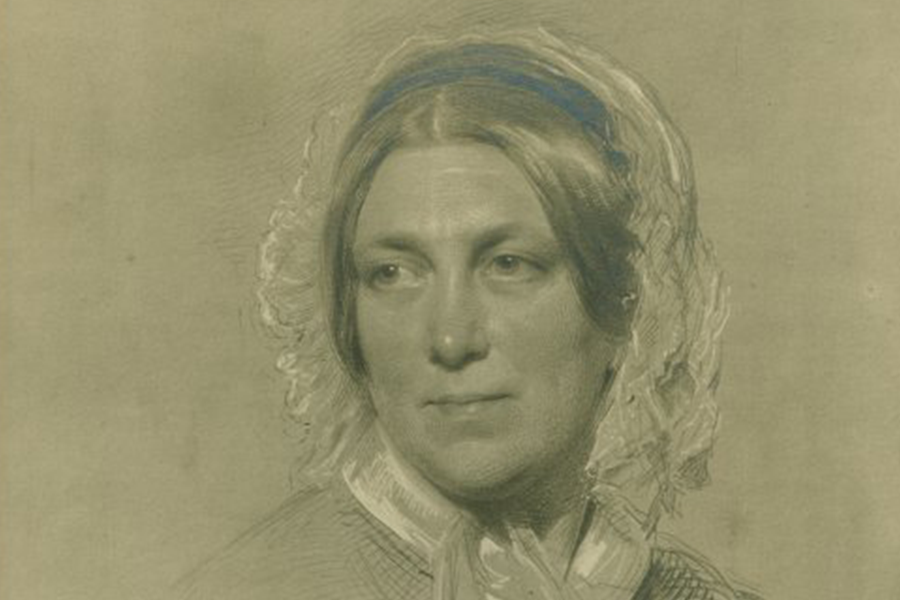
Reading Harriet Martineau’s Autobiography was interesting, as it answered some questions I had about writing. She mentions in her Autobiography that she had no ‘power of choice’ when it came to her intellectual labor.
She writes: “I have not done it for amusement, or for money, or for fame, or for any reason but because I could not help it. Things were pressing to be said, and there was more or less evidence that I was the person to say them.”
Her autobiography has an intriguing backstory. She started writing it in 1855 after being wrongly told she had a fatal heart condition, yet she survived for another twenty years. The book was only published after her death in 1877.
Harriet Martineau (1802-1876) is widely regarded as the first female sociologist, but she was also among the earliest female journalists. Throughout her extensive career, she wrote numerous essays on economics and social theory, travel narratives, an autobiography, and several novels.
Her most famous novel, Deerbrook, was published in 1839 and earned enough money to support her solely through writing, a rare achievement for a woman in Victorian England.
She worked extremely hard, naturally; she writes: “From the age of fifteen until now, I have been reprimanded in various ways for working too hard.”
I am impressed by her multifaceted personality and prolific output. She translated Auguste Comte’s The Positive Philosophy to make it accessible to a wider audience. An important contribution to sociology was her introduction to research methods through How to Observe Morals and Manners. Illustrations of Political Economy, a set of twenty-five volumes released over two years, detailed how the free market operates and highlighted the significance of economic freedom for women.
I remember George Orwell, who, in his long essay “Why I Write,” says, “All writers are vain, selfish, and lazy, and at the very bottom of their motives there lies a mystery. Writing a book is a horrible, exhausting struggle, like a long bout of some painful illness. One would never undertake such a thing if one were not driven on by some demon whom one can neither resist nor understand. For all one knows, that demon is simply the same instinct that makes a baby squall for attention. And yet it is also true that one can write nothing readable unless one constantly struggles to efface one’s own personality.”
Thus, the most basic yet important aspect emerges “driven by some demon.”