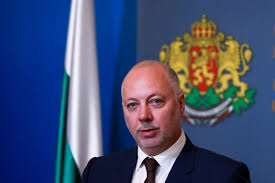
134. Finally, Bulgaria’s Rosen government resigns
For many months, Bulgaria—Europe's poorest country—faced significant issues due to pervasive corruption that became unbearable.
The political instability and uncertainty had caused doubts in people's minds at a crucial time because the country is all set to adopt the euro on January 1, 2026.
The European Commission had also warned against failings in the rule of law in Bulgaria.
More than 100,000 people were out on the street, a massive number for a country of just under 7 million.
As thousands of Bulgarians rallied in the capital, Sofia, and other towns and cities across the country in a series of rolling demonstrations expressing the public’s growing frustration, the government was panicked.
Lastly, Prime Minister Rosen Zhelyazkov submitted his government’s resignation after less than a year in office. He made an announcement before parliament was scheduled to vote on a no-confidence motion submitted by the opposition.
He said that people of all ages, ethnic backgrounds and religions have spoken out in favour of the government’s resignation, and this civic energy must be supported and encouraged.
A week ago, protests took place, sparked by the government’s 2026 budget draft, which proposed tax increases and higher social security contributions.
This is not the first time the issue of corruption has led people to take to the streets. In fact, successive governments have failed to root out corruption in Bulgaria.
Now, the country’s Moscow-friendly president, Rumen Radev, will ask the parties in parliament to try to form a new government, or he will put together an interim administration to run the country until a new election.
That election will be the eighth in four years.
Since 2020, when massive anti-graft protests erupted against the three-time prime minister, Boyko Borissov, the Bulgaria we all love so much has been in a mess.
However, it is good that people’s movements are succeeding.
Earlier in January 2025, Serbian Prime Minister Milos Vucevic resigned amid anti-corruption protests prompted by the deadly collapse of a train station roof in Serbia’s second-biggest city, Novi Sad, where 15 people were killed.
The disaster was inevitable due to rampant corruption.
Surprisingly, Vučević was mayor of Novi Sad for a decade until 2022, during which period a Chinese consortium began renovations on the central train station.
The concrete, steel and glass canopy collapsed just months after the renovation was completed in July 2024, after the station was inaugurated in 2022 by Vucic.
In India, I've never come across a protest march against corruption. Usually, here, the reasons are different and rarely concern public policy or corruption.
Fundamentally, Indians are born with a big heart that does not perceive corruption as an issue.
An extremely religious nation has adhered to a give-and-take policy for centuries – a 1250-gram Ladoo is believed to be enough to ‘convert’ or ‘extract’ your wishes into reality.
Some time ago, a dedicated BJP member and former Maharashtra MLA admitted to me that he was deeply unhappy “because his party came back to power after a five-year gap.”
He reasoned that the previous government was liberal in its give-and-take, and it was easy to bribe ministers and officers alike and get the work done.
India is filled with countless such stories, and every logical explanation seems to fall apart within its borders.