190. First genocide, now health crime
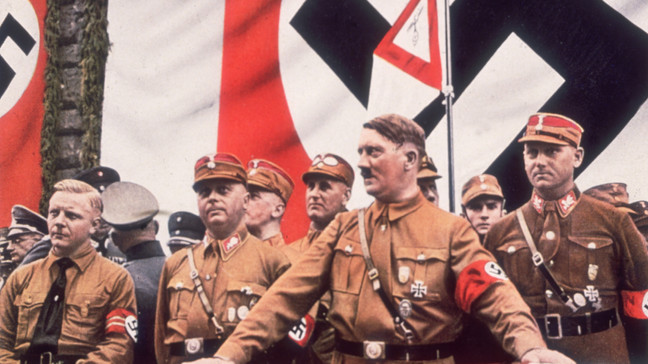
Israel, under Prime Minister Benjamin Netanyahu, is increasingly resembling what Germany was in 1938.
Not only is it responsible for genocide in Palestine, but it is also now engaging in environmental and health violations.
In a stark violation of Lebanese sovereignty, Israel’s military is carrying out a campaign of ecocide to render southern Lebanon uninhabitable, similar to its activities in the Palestinian territories of Gaza and the West Bank.
Lebanon’s President has accused Israel of spraying an herbicide linked to cancer on farmland in southern Lebanon, describing it as a “health crime” that may threaten food security and farmers’ livelihoods.
Laboratory analysis confirmed the spray contains glyphosate, a powerful herbicide labeled by the World Health Organisation in 2015 as probably carcinogenic to humans.
Samples indicated glyphosate levels, and its application could harm vegetation in affected areas, impacting agriculture, soil health, and ecological stability.
Let me make it very clear that this is not an unfounded accusation. UN peacekeepers reported being warned by the Israeli military to remain undercover during an air operation that involved releasing what they described as a non-toxic chemical. Videos show light aircraft spraying extensively over farmland.
The accusation emphasized that deploying military aircraft to spray chemicals over Lebanese territory is a serious act of aggression. It endangers food security, damages natural resources, and threatens farmers' livelihoods. Moreover, it poses health and environmental risks to water, soil, and the overall food supply chain.
Not only in Lebanon, but videos have also emerged showing Israeli aircraft apparently spraying agricultural areas in Syria on three occasions.
The southern Lebanese countryside still bears the ecological damage from an Israeli military campaign against Hezbollah that ended just over a year ago.
In addition to roughly 4,000 deaths, 17,000 injuries, and 1.2 million displacements, Israel has been accused of using white phosphorus and incendiary bombs that damaged farmland, olive groves, and forests across southern Lebanon, resulting in soil contamination with heavy metals.
The continuous assaults on southern Lebanon’s ecosystem are likely to produce cumulative, intricate, and significant effects.
Israel intentionally targeted agricultural land, including beekeepers. The use of glyphosate compounds intensifies stress on insect populations and pollinators, causing immediate and direct damage to an already vulnerable agricultural sector.
However, this is not something new. The very concept of ‘scorched’ or ‘dead’ land is rooted in a colonial tradition of warfare.
Israel has historically used strategies with prolonged harmful impacts, affecting landscapes, natural systems, ecological features, and the fundamental conditions needed to support life and livelihoods.
The recent chemical spraying should not be viewed as an isolated event. Instead, it is part of an ongoing pattern in which environmental damage becomes increasingly difficult to reverse.
With such activities, Israel is only diluting the sentiments we had for the people crushed by Hitler. The trauma the world still feels while watching those documentaries and reading books on the Holocaust is being attacked by such nonsensical activities.
The day is not far when generations after us will question the “real motive and idea behind the extent of hatred” that Hitler and his gang (which included a majority of Germans) had toward Jews.
The answers would be uncomfortable and would only distort history.