204. Commonalities between Yoon Suk Yeol and Indira Gandhi
The South Korean court has finally sentenced former President Yoon Suk Yeol to life imprisonment with labor for his unsuccessful attempt to declare martial law in December 2024, a decision that is very positive news and a day of celebration for all democracy lovers.
His wife has already been sentenced to 20 months in prison for corruption.
Yoon is the first elected head of state in the democratic era to receive the maximum prison sentence.
However, this unlikely credit was, in fact, deserved by India, but it didn’t materialize. I am referring to Indira Gandhi. She shares many similarities with Yoon.
However, it is concerning that all South Korean presidents who have served prison time have ultimately been pardoned. It should not happen to Yoon.
The charges relate to December 3, 2024, when Yoon attempted to deploy military force to disable the legislature, arrest political opponents, and seize control of the national election commission.
Yoon declared martial law on December 3, 2024, an act of insurrection intended to disrupt the constitutional order.
He intended to deploy troops to the National Assembly and arrest key figures to prevent lawmakers from convening to debate or vote.
Within hours of the declaration, 190 lawmakers circumvented military and police barriers to pass an emergency resolution ending martial law.
Later, Parliament impeached Yoon within 11 days, and the Constitutional Court removed him from office four months later.
Martial law severely undermined the political neutrality of the military and police and caused South Korea’s political standing and credibility in the international community to decline.
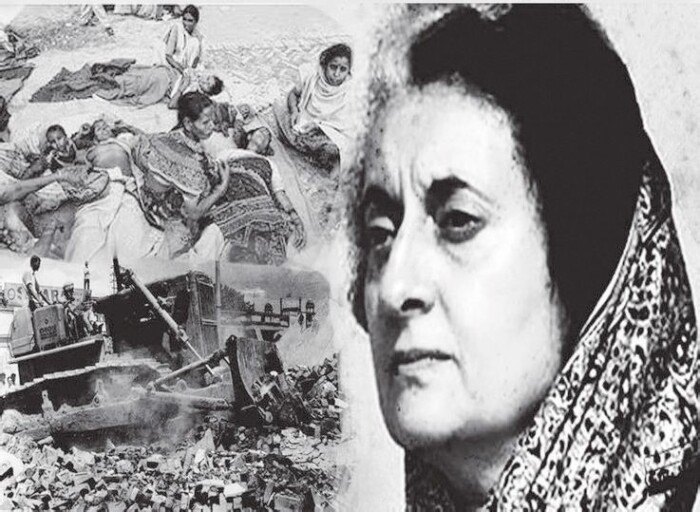
On the same lines, when in June 1975, the Allahabad High Court issued a judgment invalidating the then Prime Minister Indira Gandhi’s election as a Member of Parliament and banning her from holding any elective office for six years, the lady declared a state of internal emergency across the country at midnight.
The raids on the homes of both prominent and lesser-known leaders took place after the announcement.
The electricity to the newspaper offices had been cut off.
And what followed? Indira Gandhi, her son, allies, and almost every Congressman trampled the Constitution and Indian laws, treating them as personal property.
Whereas Yoon ordered drone incursions into North Korean airspace to provoke a confrontation that could justify military rule, in her address to the nation, Indira Gandhi, to justify her dirty deeds, described the situation as ‘incitements to the military and police by certain persons and their proposed program of action to disrupt normal functioning’.
While delivering the judgment, the judge cited the 1649 execution of England’s Charles I, who led troops into Parliament.
The judge likely would have added Indira Gandhi’s name to the same list if she had received a similar prison sentence. But it didn’t happen. And the countrymen are still suffering from bringing her back and giving her party another lease of life.
I was not surprised to learn that when the sentence was announced, some collapsed in tears, crying, “The country is finished” and “Yoon Again.”
A similar scene unfolded in Delhi when the Janata Party came to power. Many cried out when the government sought to ‘punish’ Indira Gandhi for her misconduct, including the Emergency, which led to the torture and death of thousands nationwide.
The court also sentenced seven co-defendants: Kim Yong-hyun, the former defense minister, to 30 years; Noh Sang-won, the former intelligence commander, to 18 years; Cho Ji-ho, the former police chief, to 12 years; and Kim Bong-sik, the former Seoul police chief, to 10 years.
We had several names to replace those on the list above, including Sanjay Gandhi, Vidya Charan Shukla, Siddhartha Shankar Ray, Narayan Dutt Tiwari, and Bansi Lal, along with others who held important ministerial positions and abandoned the country at such a crucial time – the list is endless, and I would not mind even adding the name of the then-President Fakhruddin Ali Ahmed himself.
Today, indeed, I am unhappy to see a credit due to my country going to South Korea, which has rightly punished its elected head of state and set an example for other democratic countries to follow if their leader goes berserk.