207. Radical parties are symptoms of social, economic, and political problems
Hitler is dead. Long live Hitler.
Hitler is not dead because an idea never dies. It just takes another shape and occupies another space.
Germany’s far-right Alternative für Deutschland (AfD) frequently makes headlines, though it has not openly condemned or endorsed Hitler as its ideological predecessor. Its current behavior clarifies the situation.
The party subtly engages with Nazi symbolism without outright endorsing it.
The recent announcement states that the party will hold its conference on July 4 and 5 in Erfurt, the capital of Thuringia in central Germany.
This date and place are especially important because it marks 100 years since a Nazi rally took place in Thuringia.
The Party was quick to clarify that it was not a deliberate attempt. As its spokesperson for the Thuringian branch stated: “Anyone who makes dangerous comparisons between the AfD conference in Erfurt and a Nazi party gathering in Weimar a century ago is solely focused on exploiting history for ideological purposes.”
But the truth is otherwise, and people, politicians, and historians are united in their condemnation.
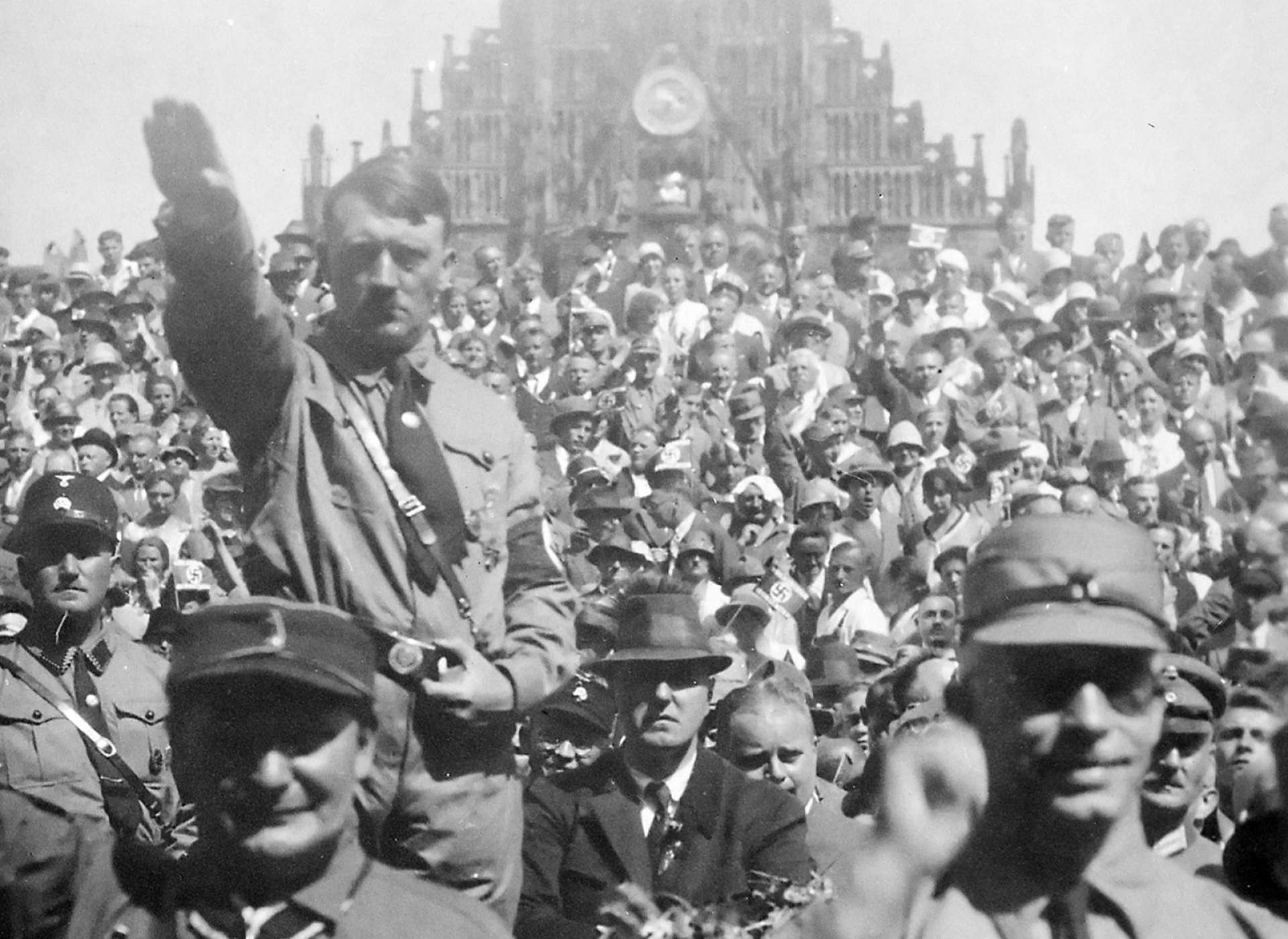
Let's explore history. On July 3 and 4, 1926, Adolf Hitler, still far from power, brought his party members together in Weimar, then the state capital.
The reason Hitler chose this place was that Thuringia was the first to lift sanctions on the Nazi Party and its leader after the party's botched coup attempt in Munich in 1923.
Although the gathering was less prominent than the famous Nuremberg rallies of the 1930s. However, for the Nazi Party, Weimar marked a significant step in their rise to power.
The Weimar rally was significant because many of the Nazi rituals were first introduced here.
It was here that Hitler introduced his famous salute. And it was Weimar which became the seat of the first state government to appoint a Nazi minister in 1930, three years before Hitler became the chancellor of Germany.
Therefore, Hitler's fondness for this place was understandable, and Weimar served as both a sanctuary for the movement and a testing ground for Nazi concepts.
The 1926 Weimar rally gained notoriety. Despite lasting only two days, the Nazis caused considerable chaos, including large clashes with police. Local residents also endured harassment from visitors, especially targeting Jews and those with left-leaning views.
If Thuringia served as a sanctuary for the early Nazi movement, it is now a stronghold for the AfD, with recent polls showing the party holds 38% of the vote in the state.
The AfD is now neck-and-neck in the polls with the ruling CDU party, led by Chancellor Friedrich Merz. Some political observers think it might finally break through this year.
It has a large support base, including a dedicated core of ideological supporters unaffected by Nazi comparisons, as well as a larger group dissatisfied with the social and economic status quo and the mainstream parties.
The AfD is not the Nazi Party, yet it intentionally cites its actions, consciously drawing historical parallels rather than avoiding them. It is a conscious symbolic act.
But why do such political parties garner so much support? That’s the big question. The answer lies in the corrupt system. The fact is, the Radical parties are symptoms of social, economic, and political problems. These parties are not the causes of political and social problems. Rather, they are effects of the prevailing causes.
As long as the causes are not properly addressed, this will breed such associations, which will one day become a political party.