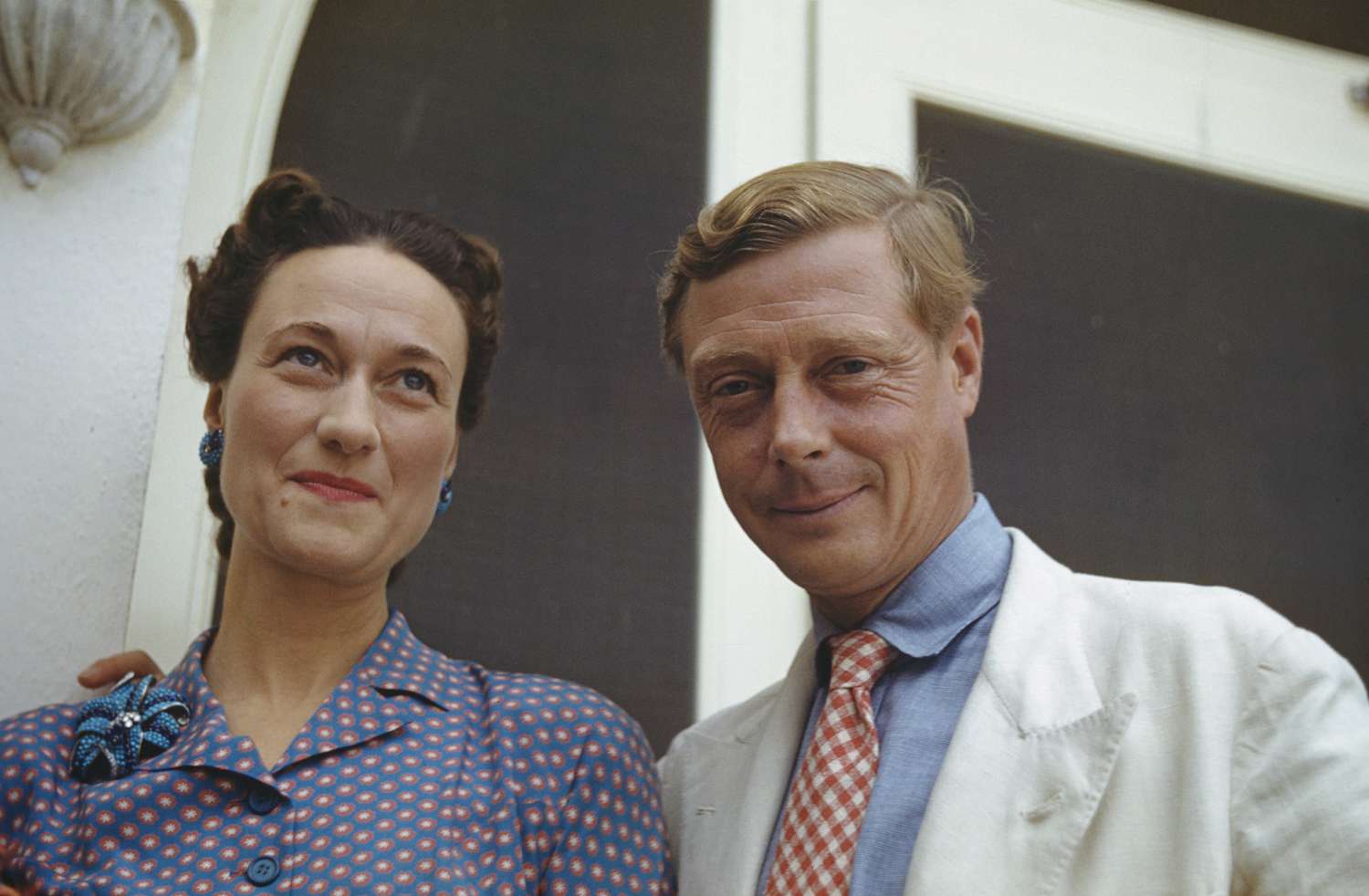
144. F*CK the throne, I’ll marry the woman I love
As long as people's hearts beat, the names King Edward VIII and Wallis Warfield Simpson will remain in human history, both spoken and written.
King Edward VIII is the sole man who relinquished his rightful English throne to marry the woman he loved.
We find no other name that has sacrificed so much for his love of life. It was a timeless love story that endured, but their sacrifices were immense.
Wallis herself is reported to have summed up her life in a sentence: “You have no idea how hard it is to live out a great romance.”
However, Wallis Simpson wasn’t a comely, sweet 16-year-old girl, and it wasn’t a love-at-first-sight tale.
She was a charismatic, electrifying American socialite who had been divorced twice and was relentlessly ambitious.
Wallis first married a United States Navy officer named Win Spencer. Due to the demands of his job, there were long periods of separation, which eventually led to their divorce. She then married her second husband, Ernest Simpson.
In 1931, she met Edward, the future heir to the British throne, and soon Edward was irretrievably besotted with Wallis. Five years later, after Edward became King of the United Kingdom, Wallis divorced Ernest to marry him. Edward’s official biographer has termed his behaviour as slavishly dependent on Wallis.
The King's desire to marry a woman with two living ex-husbands threatened to cause a constitutional crisis in the United Kingdom, ultimately leading to his abdication in December 1936 to marry her.
Edward understood that the government at the time would resign if the marriage proceeded, potentially triggering a general election and jeopardizing his position as a politically neutral constitutional monarch.
Furthermore, such a marriage would have clashed with Edward's position as the nominal leader of the Church of England, which, during that period, opposed remarriage after divorce if the previous spouse was still alive.
Officially, Edward VIII (1894 –1972) was the King of the United Kingdom and the British Dominions and Emperor of India from 20 January 1936 until his abdication in December of the same year.
Following his abdication, Edward was appointed Duke of Windsor, and Wallis was formally titled the Duchess of Windsor by his brother and successor, George VI.
In 1940, Edward became the governor of the Bahamas, prompting the couple to move there until he resigned in 1945. During the 1950s and 1960s, they frequently travelled between Europe and the United States, enjoying a relaxed lifestyle as prominent society figures.
Meanwhile, their private life fueled much speculation, and Wallis remains a controversial figure in British history.
In 1937, they had visited Germany and met Adolf Hitler at the Berghof, when Hitler said of Wallis, “she would have made a good queen”.
As a result, during the Second World War, Wallis and Edward were suspected of being Nazi sympathisers.
Wallis was even considered a German agent by the British government and the US FBI, a claim that she ridiculed in her letters to Edward and friends. There were reasons.
The claim was also reinforced because, as German troops advanced into France, they fled from their Paris home where they had been staying during those days and took refuge in the house of a banker suspected of being a German agent.
Another of their acquaintances, Charles Bedaux, who had hosted their wedding, was arrested on charges of treason in 1943 but committed suicide in jail before the case was brought to trial.
Both Queen Elizabeth II and her son, Charles, had visited the Windsors in Paris in Edward's later years, with the Queen's visit occurring shortly before Edward's death.
Edward died in 1972 from throat cancer, and after that, Wallis was rarely seen in public and became increasingly frail.
Eventually, Wallis's passionate love story and fulfilling life concluded when she died in Paris in 1986 at the age of 89. They had no children.
At her death, she was given the full honours she deserved, and had been denied them all her life, when Queen Elizabeth II, her husband Prince Philip, their son Charles, and daughter-in-law Diana attended, along with other Royal family members.
Wallis's memoir, The Heart Has Its Reasons, published in 1956, is an interesting read.
Edward became popular because of his charm and charisma, and his fashion sense became a defining feature of the era. His seemingly inattentive attitude toward constitutional norms and his impatience with court protocol worried politicians.
If you love history, especially British history, and want to learn about the family that ruled over you for centuries, you should watch The Crown, a historical drama series on Netflix.
Created for television by Peter Morgan, adapted from his stage play, The Audience, which centres on Queen Elizabeth II's reign.
The Crown has received praise from critics for its acting, directing, writing, cinematography, and production quality.
The series consists of six seasons, each of 10 episodes, spanning almost six decades, beginning shortly before Princess Elizabeth's wedding in 1947 and ending with Prince Charles's 2005 wedding to Camilla Parker Bowles.
However, I have no intention of going into detail about this 60-episode magnum opus.
Lia Williams and Geraldine Chaplin have portrayed Willis beautifully in the series.
In his novel Famous Last Words, Canadian author Timothy Findley, in a fictional depiction, portrays Willis as a manipulative conspirator.
But, after reading her memoir and watching The Crown on Netflix, I feel her life was the ultimate fairy tale. She was unhappy when Edward ignored her pleas and threw up his position to spend the rest of his life with her.
Willis was anything but a victim of her own ambition, living out a great romance that became a great tragedy.
I personally have great admiration for the couple. If given a chance, one should live life like them.