195. Democracy is in jail in Hong Kong
Two days ago, a devastating piece of news for lovers of democracy around the world came from Hong Kong.
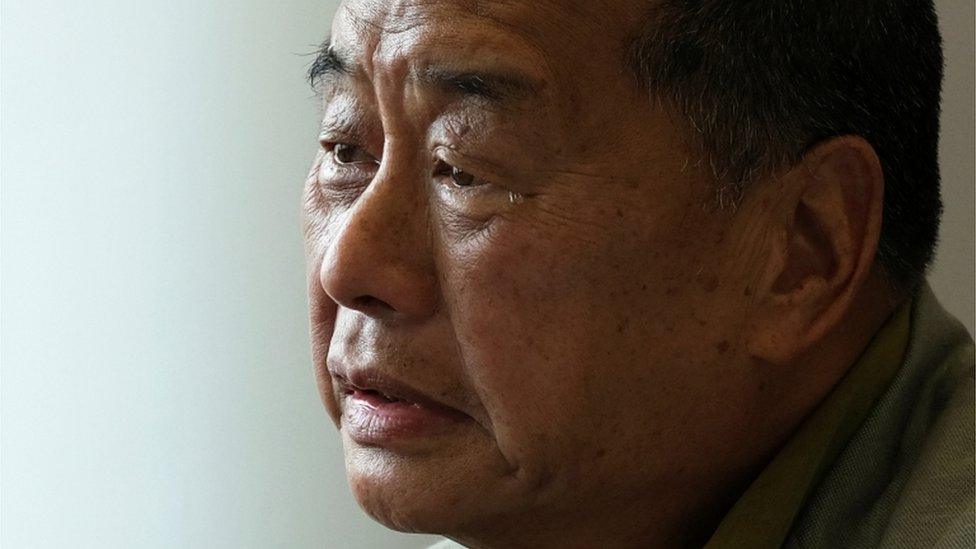
Jimmy Lai, a 78-year-old media mogul and well-known pro-democracy activist, has received a 20-year sentence. This effectively means he will spend the rest of his life in prison, isolated. The sentence was condemned by Taiwan, as well as press freedom and human rights groups.
Lai was convicted in December on charges of sedition and conspiracy to collude with foreign forces. The judges described him as the mastermind behind the conspiracies.
His Apple Daily backed the pro-democracy movement that gained momentum in the city during the 2010s. This movement faced suppression in June 2020 after the enforcement of a stringent national security law that criminalized many forms of dissent. Lai was subsequently arrested and charged under this law in August 2020. The newspaper was ultimately forced to close in 2021.
In 2003, his media outlets also supported protests against a proposed national security law for Hong Kong. In 2014, they supported the Occupy Central movement, and Lai also participated in the protest camp.
The judges said he had harbored his hatred and resentment toward the People’s Republic of China for many of his adult years and sought the downfall of its ruling Communist Party, even though the ultimate cost was the sacrifice of the people of the People’s Republic of China and the Hong Kong Special Administrative Region.
The sentencing underscores Hong Kong’s transition from a largely free city to one where dissent faces severe suppression by authorities under the influence of the Chinese Communist Party.
Jimmy Lai and his media enterprises significantly contributed to Hong Kong's status as a global financial hub by ensuring the free flow of information about its corporate underbelly. His Next Magazine and Apple Daily became outspoken, unapologetic pro-democracy voices that challenged authorities who labeled him a traitor and a criminal.
The whole world knows that the charges were politically motivated and intended to silence one of Hong Kong’s most influential pro-democracy campaigners.
Jimmy Lai’s journey from humble beginnings to one of Hong Kong’s most renowned billionaires is a classic rags-to-riches tale.
At age 12, he moved from Mao’s China to Hong Kong, where he worked as a child in garment factories. Over the years, he built a business empire that included the retail chain Giordano and later expanded into a media conglomerate, earning the nickname “Rupert Murdoch of Asia.” In 2020, Lai was estimated to be worth $1.2 billion.
A simple businessman, Lai, following the 1989 Tiananmen Square massacre of student protesters by Chinese troops, adopted a radical political stance and soon launched Next Magazine.
Subsequently, he helped establish Apple Daily just before Hong Kong’s handover from the UK to China. The publication was known for its bold tabloid stories and daring investigative journalism. The shutdown of Apple Daily is a major blow to Hong Kong's democracy. It was the only newspaper that stood up for democracy in Hong Kong.
Hundreds of activists, lawyers, and politicians have been pursued, jailed, or forced into exile. Lai was advised to use his UK citizenship to flee, as many others had, but he refused, saying he wanted to stay, support his journalists, and keep fighting for Hong Kong. He said he would rather go to jail than abandon the city that “gave me everything”.
A reason is cited that Lai has business and political connections with Donald Trump, his former vice president Mike Pence, former secretary of state Mike Pompeo, and veteran Democratic legislator Nancy Pelosi.
Donald Trump said he made it abundantly clear to General Secretary Xi in October that if General Secretary Xi wants to improve his relationship with the United States, freeing Jimmy Lai is where he needs to start.”
Keir Starmer said he raised Lai’s case when he met China’s leader, Xi Jinping, in Beijing in January. However, it is unclear what, if any, progress the UK has made.
Lai’s years of persecution demonstrate the Chinese government’s determination to crush independent journalism and silence anyone who dares to criticize the Communist Party.
But Hong Kong’s press associations, once the voices of media freedom in the city, remained silent. Hong Kong now ranks 140th out of 180 territories surveyed.
Let us remember that Liu Xiaobo, the Chinese Nobel Peace Prize laureate, was sentenced to 11 years in prison in mainland China for subversion of state power. He died in a hospital in 2017, guarded by security personnel.