102. I wish I could believe in a God of some kind, but I simply cannot
Long before Amitabh Bachchan captivated audiences with his deep baritone voice, Richard Burton (1925-1984), a primarily Shakespearean actor, was already well known for his voice.
As an undergraduate, Burton's performance in an Oxford University Dramatic Society production left a fellow actor saying, "At times, he utterly captivated the audience with his stillness. His voice, capable of singing like a violin and possessing a bass strong enough to shake the floor."
He was the first to start the profit-sharing trend in the film industry, where actors earn a portion of the gross profit in addition to their acting fees.
By the late 1960s, Burton had become a leading box-office star and one of the highest-paid actors worldwide, earning $1 million.
Nominated seven times, Burton never won an Academy Award.
He received nominations for his performances in films such as My Cousin Rachel (1952), The Robe (1953), Becket (1964), The Spy Who Came In from the Cold (1965), Who's Afraid of Virginia Woolf? (1966), Anne of the Thousand Days (1969), and Equus (1977).
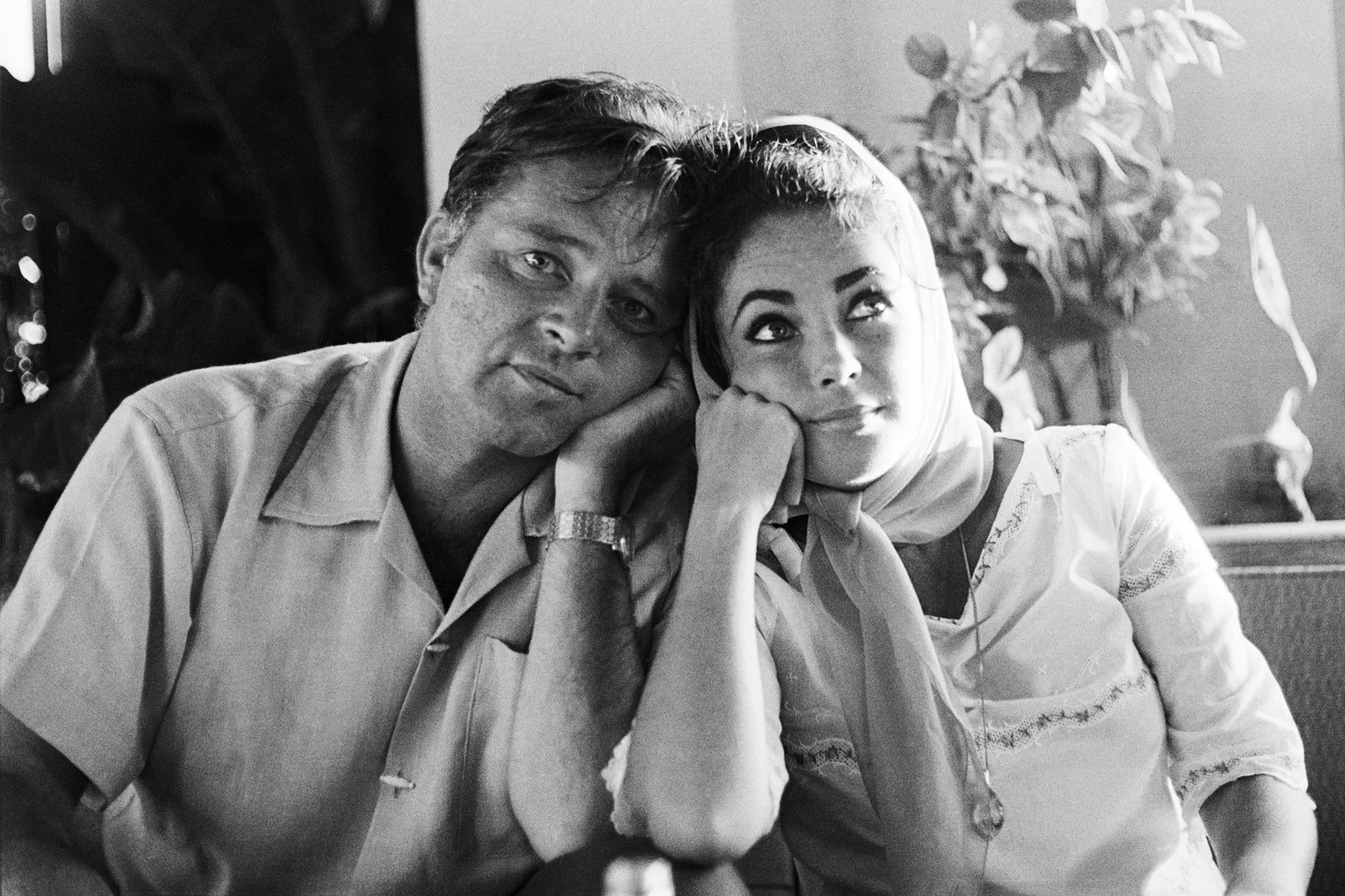
Burton also remained in the news due to a turbulent relationship with his second wife, Elizabeth Taylor, which involved two marriages and two divorces, keeping him almost constantly in the headlines.
It's amusing to note that his last film with Taylor was the two-part melodrama 'Divorce His, Divorce Hers' (1973).
Before entering the film industry, he served in the RAF for three years.
However, none of the above information was the reason I am remembering him today on his birthday.
I have my personal reasons for liking this man.
Married five times, twice consecutively to Taylor, when Burton died in 1984 at his home in Switzerland, he was 58, and he was buried with a copy of Dylan Thomas's poems.
After Burton portrayed Leon Trotsky in The Assassination of Trotsky, he agreed to play Yugoslav leader Josip Broz Tito in a biopic because of his admiration for him.
During filming in Yugoslavia, he openly admitted that he was a communist, explaining that he saw no conflict between making a good living from movies and holding left-wing beliefs, since "unlike capitalists, I don't exploit other people."
The BBC permanently banned him for writing two newspaper articles questioning the sanity of Winston Churchill during World War II.
Burton wrote in his article that he was angry about Churchill’s alleged promise to wipe out all Japanese people on the planet.
In 1957, Burton relocated to Switzerland, where taxes were comparatively lower. Not a bad move.
Not widely known, Burton was desperate to be taken seriously as a writer. The one constant in his life was his collection of books.
He has been quoted as saying that he would rather be a writer than an actor. He wrote A Christmas Story a truly memorable tale that will seize and hold the heart of every reader.
My admiration for him increased after reading his second book, The Richard Burton Diaries, which Chris Williams has superbly edited.
A fascinating glimpse into the mind of a highly intelligent man whose life is worth remembering.
In some sections, the writing is nearly poetic in its beauty and rhythm. We can almost hear his captivating voice echoing through each word. He comes across as witty, intelligent, articulate, and enormously well-read.
And lastly, like me, Burton was an atheist. He stated, “I wish I could believe in a God of some kind, but I simply cannot.”
People like Richard Burton are rarely born.
(Top Photo: Richard Burton with Elizabeth Taylor)