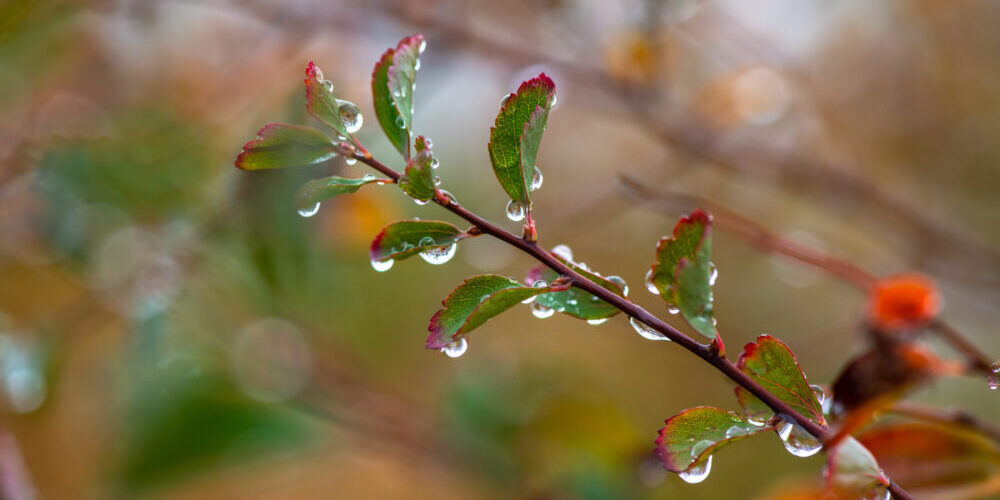
224. Words spoken by droplets and leaves
Gabriele D'Annunzio (1863–1938) was an Italian poet, playwright, journalist, and politician, and served in the Royal Italian Army during World War I.
The Chilean poetess Lucila Godoy Alcayaga, who received the Nobel Prize in Literature in 1945, adopted the first part of her pseudonym, Gabriela Mistral, as a tribute. Luchino Visconti's film, The Innocent, is adapted from D'Annunzio's novel.
Alcyon is the title of a collection of his 88 poems. It was intended to be the third volume in a seven-part series called Laudi del cielo, del mare, della terra e degli eroi (Odes to the sky, the sea, the earth, and the heroes), but only four volumes were published: Maia, Elettra, Halcyon, and Merope. The seven books of the Laudi were named after the stars in the Pleiades cluster.
In the historical biographical TV series Mussolini: Son of the Century, D'Annunzio is played by Paolo Pierobon. Available on Prime TV, the series is directed by Joe Wright and is based on the 2018 novel M: Son of the Century by Antonio Scurati. The series follows Benito Mussolini's early career from the founding of the Fasci Italiani in 1919 to his speech in Parliament on January 3, 1925.
His best-known poem is La pioggia nel pineto (Rain in the Pinewood), which showcases the finest moments of D’Annunzio’s poetic craftsmanship and sensitivity. In it, summer takes center stage, symbolizing the vitality of life, while the poet is fully immersed in this life, blending with the natural elements and embodying all the senses.
The poet, along with his lover, explored the spirit of a damp Abruzzo Forest, listening to the rain fall on various trees and plants. Its lack of rigid form reflects early 20th-century trends to dissolve classical constraints, though it avoids the fragmentation seen in later avant-garde works.
Read the English translation, but the friend who provided it did not mention the translator's name.
Be silent. At the edge
of the wood, I do not hear
the human words you say;
I hear newer words
spoken by droplets and leaves
far away.
Listen. It rains
from the scattered clouds.
It rains on the briny, burned
tamarisk,
it rains on the pine trees
scaly and rough,
it rains on the divine
myrtle,
on the bright genista flowers
gathered together,
on the junipers full of
fragrant berries,
it rains on our sylvan faces,
it rains on our bare hands
on our light clothes,
on the fresh thoughts
that our soul, renewed,
liberates,
on the beautiful fable
that beguiled you yesterday,
that beguiles me today,
oh Hermione.
Can you hear?
The rain falls
on the solitary vegetation
with a crackling noise that lasts
and varies in the air
according to the thicker,
less thick foliage.
Listen.
With their singing, the cicadas
are answering this weeping,
this southern wind weeping
that does not frighten them,
and nor does the grey sky.
And the pine tree
has a sound, the myrtle
another one, the juniper
yet another, different
instruments
under countless fingers.
And we are immersed
in the sylvan spirit,
living the same
sylvan life;
and your inebriated face
is soft from the rain,
like a leaf,
and your hair
is fragrant like the light
genista flowers,
oh terrestrial creature
called Hermione.
Listen, listen!
The song of the flying cicadas
becomes fainter and fainter
as the weeping grows stronger;
but a rougher song
rises from afar,
and flows in
from the humid remote shadow.
Softer and softer
gets weaker, fades away.
One lonely note
still trembles, fades away.
No one can hear the voice of the sea.
Now you can hear the silver rain
pouring in
on the foliage,
rain that purifies,
its roar that varies
according to the thicker,
less thick foliage.
Listen.
The child of the air is silent;
but the child
of the miry swamp, the frog,
far away,
sings in the deepest of shadows
who knows where, who knows where!
And it rains on your lashes,
Hermione.
It rains on your black lashes
as if you were weeping,
weeping from joy; not white
but almost green,
you seem to come out of the bark.
And life is in us fresh
and fragrant,
the heart in our chests is like a peach
untouched
under the eyelids our eyes
are like springs in the grass
and the teeth in our mouths
green almonds.
And we go from thicket to thicket,
at a time together, at a time apart
(the vegetation, thick and vigorous,
entwines our ankles
entangles our knees)
who knows where, who knows where!
And it rains on our sylvan faces,
it rains on our bare hands
on our light clothes,
on the fresh thoughts
that our soul, renewed, liberates,
on the beautiful fable
that beguiled me yesterday,
that beguiles you today,
oh Hermione.